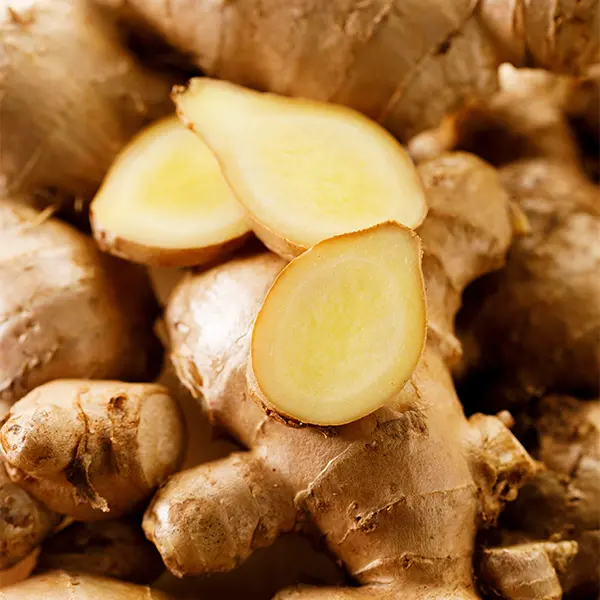
Ginger is a root with many beneficial properties, used for centuries both in cooking and in traditional medicine. Prized for its spicy and aromatic flavor, ginger not only enhances dishes, but also offers health benefits, making it a versatile and indispensable ingredient in many culinary and therapeutic cultures.
Origin and Provenance
Ginger (Zingiber officinale) belongs to the Zingiberaceae family and is native to tropical regions of Asia, especially China and India. Its cultivation has spread to many other tropical areas of the world, including Africa, Latin America and the Pacific Islands, thanks to its ability to adapt to different hot and humid climates. Historically, ginger was one of the first spices to be traded along the ancient Silk Routes, playing a crucial role in cultural and commercial exchanges between East and West.
Characteristics
Ginger is a perennial herbaceous plant with underground rhizomes that are the part used both in cooking and in medicine. The rhizomes are fibrous, irregular in shape, brown on the outside and light yellow on the inside. They have a wrinkled surface and can vary in size, depending on growing conditions and variety. The ginger plant can reach a height of about 1 meter, with long, narrow leaves and brightly colored flowers, which can be red, yellow or white.
Uses
Ginger is widely used in many cuisines around the world to add flavor and aroma to dishes. It can be used fresh, dried, pickled, or powdered. In Asia, it is a key ingredient in curries, soups, marinades, and rice and noodle dishes. In Western cuisine, ginger is often used in desserts, biscuits, cakes, and beverages such as tea and cocktails. Its versatility makes it suitable for both savory and sweet dishes, offering a unique balance of spiciness and freshness. In addition to cooking, ginger is used in cosmetics, where it is used in skin and hair products due to its antioxidant and stimulating properties. Additionally, ginger essential oil is used in aromatherapy to promote mental and physical well-being.